
The Moments Between Knowing and Doing: Motivating Behavioral Change
Published on September 3, 2026
Published on
September 3, 2026
Why the moments between clinical care encounters matter as much – and even more than – the encounters themselves
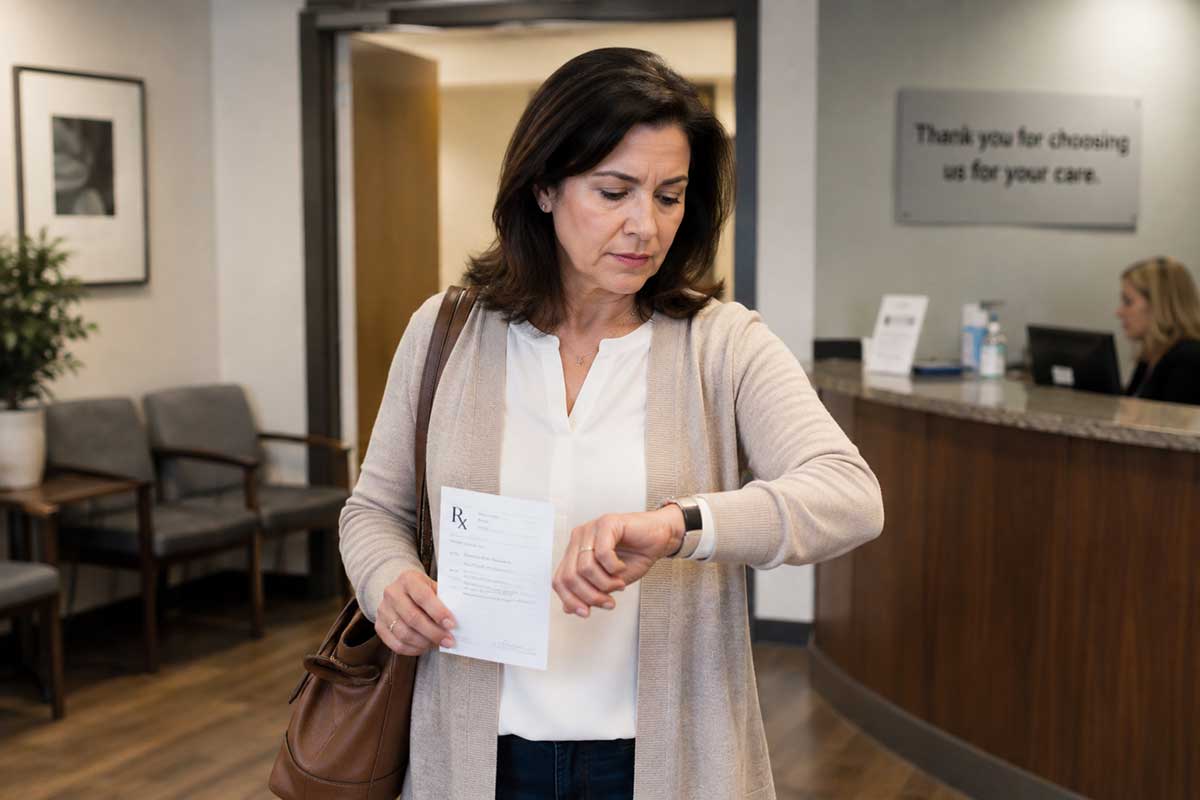
Imagine a patient leaving a medical appointment. The patient was examined. The care plan was explained. The patient was directed on what needs to happen next:
- Drop off/pick up prescriptions
- Take them as directed
- Make dietary changes
- Start exercise routine
- Schedule follow-up appointments: bloodwork, urinalysis, medical
Then 7:00 p.m. arrives:
- Dinner needs to be made, served, and cleaned up
- The healthier food options in the house are limited
- Work was exhausting, and there’s still more to do
- A child needs help with homework
- The pharmacy closes soon
- Parent calls with healthcare needs
- Spouse needs to discuss finances
The patient is tired, stressed, and trying to remember everything the clinician said several hours ago. The care plan hasn’t changed. But the environment in which that person has to carry it out has. This is one of healthcare’s most persistent engagement challenges: knowing what to do isn’t the same as doing it. And it is precisely the space between the two where behavioral science can make a difference.
The Care Plan Meets Real Life
Healthcare has become extraordinarily sophisticated at diagnosing disease, identifying appropriate therapies, and developing evidence-based treatment plans. But much of what determines whether those plans succeed happens after someone leaves the clinical setting.
- Medication is remembered when it’s time to take it
- Food choices are made at mealtime, or when hunger strikes
- Stress is managed – or it isn’t – at work
- New routines are attempted throughout the day
The MiLD™ framework describes these lived environments as the places where clinical advice is actually put into action. That distinction changes the engagement question.
- Instead of only asking: Did we give the patient the right information?
- Healthcare organizations also need to ask: What will help this person act on that information when real life gets in the way?
That’s the problem BehavioralRx® addresses.
Behavior Change Starts with the Person
BehavioralRx is the GoMo Health proprietary approach to engagement, grounded in behavioral psychology and cognitive neuroscience. Rather than looking only at the medical diagnosis, it considers the behaviors, emotions, cognition, and life factors that influence a person’s ability and motivation to act. Within BehavioralRx are scientific guiding principles that influence how engagement is designed. They include:
- Reduction
- Conditioning
- Influence
- Reflection
- Anchoring
- Wander and Wonder
- Nurturing
- Environment of Need
- Tailoring
Each BehavioralRx guiding principle addresses a challenge that can affect whether someone takes action. Together, the principles help translate clinical guidance into support that is easier to understand, more relevant to the individual, and more realistic to put into practice.
Consider our patient again. They left the appointment with several clinically appropriate recommendations: eat better, exercise, reduce stress, take your medication, monitor your symptoms, and schedule your follow-up.
The issue isn’t whether the recommendations are right. It’s whether the patient can realistically act on all of them at once.
When someone is already managing work, family, stress, and other demands, a long list of health instructions can quickly become overwhelming. And when everything feels important, it can be difficult to know where to start.
This is where the BehavioralRx principle of Reduction comes into play. Reduction simplifies the experience by focusing attention on one manageable thought, question, or action at a time. Instead of asking someone to transform their life tonight, the immediate goal might simply be:
Take tonight’s medication.
Tomorrow, there can be another achievable action. The care plan hasn’t become less important. The path to acting on it has become more manageable.
That is the role of BehavioralRx: helping bridge the space between what someone has been told to do and what they can realistically do in the context of everyday life.
Timing Matters-Meet the Person in the Moment
Imagine that same person receives guidance about stress management at 10:00 a.m., while sitting in a meeting. It may be excellent information, but at that moment, it is just one more thing competing for their attention, and may even add to their stress. Now imagine that same guidance arrives at 6:00 p.m., when Sarah has indicated she is typically transitioning from work to home. A simple prompt to pause, take a few deep breaths, or reset before moving into the evening may be far more relevant and easier to act on.
The BehavioralRx Environment of Need principle focuses on reaching people when support is most useful, while Tailoring helps make that support relevant to the individual’s needs and circumstances.
Together, they create a more meaningful definition of personalization. Personalization isn’t simply:
“Hi, Sarah.”
It is understanding what Sarah may need, when she may need it, and what is realistic for her within that moment. The MiLD report describes this as in-the-moment support, timely guidance delivered at the point of decision-making, along with personalized learning and resources that evolve with the participant’s needs.
The difference is subtle but important. Healthcare is no longer simply delivering information to someone. It is supporting someone through the moments when healthier decisions are actually made.
Sometimes the Most Important Message Is: “You’re Making Progress.”
Behavior change isn’t perfectly linear. Our patient may remember the medication for six days and forget on the seventh. They may walk three times this week and not at all next week. They may feel motivated after the appointment and discouraged two weeks later. That’s where other BehavioralRx principles become important:
- Nurturing provides guided motivation over time
- Reflection encourages people to re-examine previous thoughts, preferences and activities
- Influence incorporates shared decision-making
Instead of treating every setback as failure, engagement can help someone recognize progress, reflect on what worked, and continue moving forward. It’s about making it easier to keep going.
Behavioral science doesn’t eliminate the need for healthcare professionals. It helps healthcare organizations use their people more effectively by leveraging resources that offload them, while at the same time delivering the information they need to best support patients. Imagine a patient responds to a check-in: “I’m having trouble breathing tonight.” That moment no longer calls for another educational message. It calls for escalation.
Behaviorally informed engagement can listen for responses, identify needs, and connect people to appropriate human support when necessary.
That model has already been demonstrated in GoMo Health programs. For example, in a congestive heart failure program at a large cardiology practice, patients received personalized messaging, caregiver support, symptom monitoring and rapid escalation pathways, along with guidance related to medication, diet, exercise, stress, smoking cessation and emotional coping.
Participants reported:
- 98% medication adherence
- 43% decrease in tobacco use
- Ninety-day hospital readmissions declined from 19% to 12%
- one-year readmissions decreased from 44% to 19%
Those results weren’t produced by simply sending more messages. They came from creating a continuous support structure around the actions patients were being asked to take.
The Goal Isn’t More Engagement. It’s More Meaningful Engagement.
This distinction matters for healthcare leaders. Success shouldn’t be defined solely by how many messages were sent, how many emails were opened, or how many people logged into a portal. Those metrics tell us whether someone interacted with the engagement. The more important question is:
- What happened because of it?
- Did someone take the medication?
- Did they recognize a symptom earlier?
- Did they keep the appointment?
- Did they change their eating habits?
- Did they ask for help?
- Did they feel more confident managing their health?
- Did a new behavior become easier to repeat?
- Did the care team learn something early enough to intervene?
BehavioralRx and MiLD shift the goal from simply communicating healthcare information to helping people practice healthcare behaviors in the environments where those behaviors actually happen.
That distinction also creates an opportunity for healthcare organizations to scale behavioral reinforcement. The GoMo Health Enterprise Engagement Platform is designed to deliver MiLD moments across the care journey, aligning behavioral reinforcement with clinical milestones and real-life decision points while adapting engagement to individual needs.